
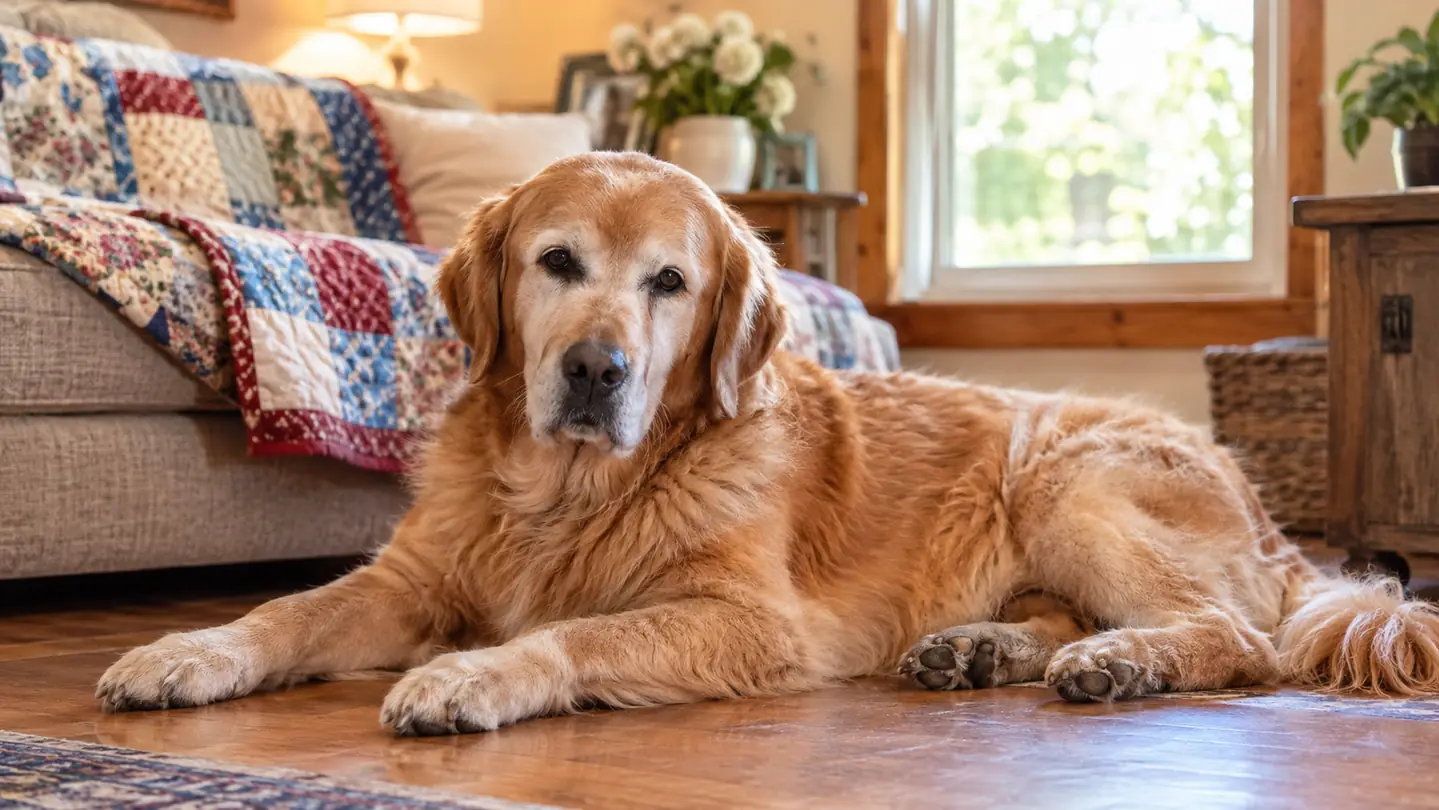
Honey started taking the three back porch steps one at a time last January. Not the way she had for eight years, hopping down and trotting to the fence. One front paw, a pause, then the next. She is a ten-year-old yellow Labrador retriever mix, about seventy pounds, and until that week I had never once thought about her joints. I have thought about little else since.
Here is the plain truth about a slowing senior dog. The changes arrive out of order and none of them look like an emergency. A longer nap. A hesitation at the car door. A morning where she waits for you on the porch instead of meeting you in the yard. Each one is easy to explain away. Together they are a pattern, and by the time I saw the pattern, our vet had already found early arthritis in both of Honey's hips and mild arthritis in her left elbow. She started Honey on Cosequin from Nutramax Laboratories in June and told me to add a fish oil. That is the whole plan.
The bottle our vet reached for first, and the one still on my shelf in November
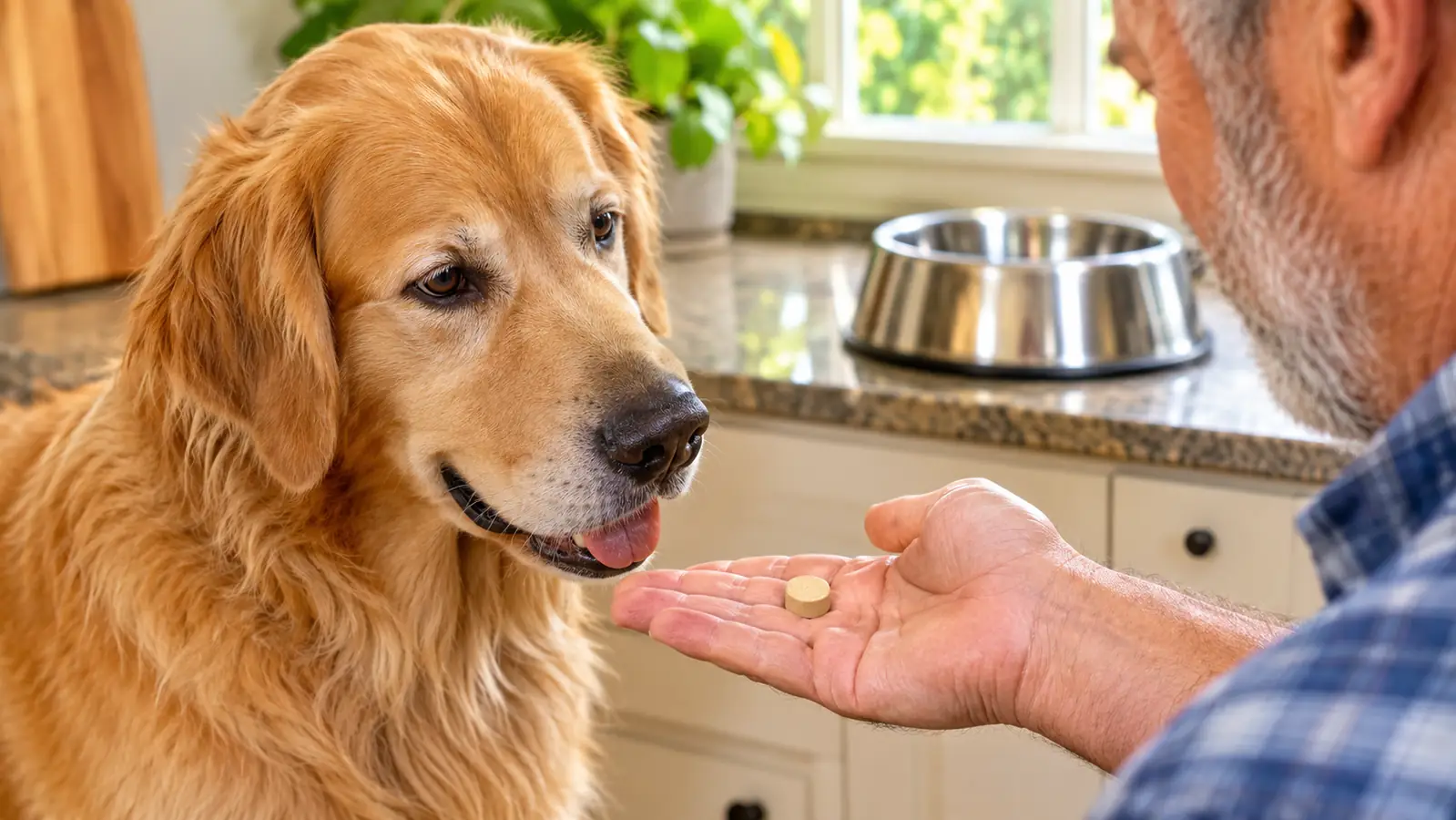
Cosequin chewable tablets, given with breakfast per the label for her weight, with our vet setting the starting amount. It is the base everything else in Honey's routine sits on.
Amazon Check Today's Price on Amazon →Stiffness after a nap is the earliest signal you will get
For Honey it was never a limp. It was the first twenty steps after she stood up from her quilt. She would rise, stand still a moment, then walk it off. Our vet explained that a dog with sore joints often hides it until she has been still, because movement gets the stiffness moving too. That is why the nap is the tell. If your dog is slow out of the gate every afternoon and fine by supper, write it down and make a call. It is also why I moved her tablet to breakfast, so the support is in her system before her longest sleep of the day.
Three porch steps tell you more than a staircase ever would
We live in a one-story brick house, so I cannot tell you how Honey handles stairs, because there are none inside. What I have is three wooden steps from the back door down to the fenced yard, and I have watched her take them thousands of times. In February she went down sideways, one step at a time, both back legs together. In November she goes down in one easy motion on a warm afternoon. Same three steps, same dog, five months apart. Find your version of my three steps, the small daily obstacle you see on autopilot, and watch it. It is the cheapest measurement you will ever take.
The back seat of the car is where I first saw her hesitate
Honey rides in the back seat of my sedan. She used to be up there before I had my door shut. Last winter she stood at the open door and looked at the floor mat and thought it over. Not fear. Arithmetic. She was deciding whether the landing would hurt. Our vet said that hesitation is a classic early sign, because jumping in and jumping out load the hips hard. On cold mornings I put a hand under her hips and help her up. She still gets in. That is the part I care about.
A dog that stops moving loses the muscle that protects the joint
This was the part I had not thought through. Our vet pointed out that when a sore dog self-limits, the muscle around the hips thins out, and then the joint has less support than it did before. It turns into a slow circle in the wrong direction. Her answer was not rest. It was to keep the two short walks, morning and late afternoon, about twenty minutes each, and to keep them slow and level. Joint support and movement are not alternatives to each other. In our house they are the same project.
Every pound she carries lands on two hips that already hurt
Honey is about seventy pounds and she is not overweight, and I intend to keep it that way. Our vet was direct about it. Extra weight on a dog with early arthritis in both hips is a tax paid on every step, every jump, every climb onto the couch. So I measure her food instead of eyeballing it, and I count the chicken I slip her when I cook. The joint supplement from Nutramax Laboratories gets all the attention, but the honest work is the bowl and the leash.
The label tells you what is in the tablet, and the label is all I trust
I was a school librarian for thirty-two years. My instinct with any bottle is to read the small print before I believe the front of it. The Cosequin label lists glucosamine hydrochloride, given as FCHG49, and sodium chondroitin sulfate, given as TRH122, plus MSM. It comes as chewable tablets, 132 of them in the bottle. The listing notes that Nutramax Laboratories has worked in pet health for over 25 years and that this is the number one vet recommended retail joint health supplement brand. I am not a chemist and I do not play one in my kitchen. I read the label, I asked our vet, and I followed it.
A routine you can keep beats a better one you cannot
The tablets live on one shelf of the kitchen cabinet next to the refrigerator. Honey gets hers with breakfast, per the label for her weight, and our vet set the starting amount. That is the entire ritual and it takes nine seconds. I know people with elaborate supplement schedules they abandon by the second week. Mine survives because it is boring. When your dog is ten, boring is a feature and not a flaw. Same shelf, same time, same hand.
It gives our vet something concrete to ask about
At Honey's last checkup our vet asked how she was doing on the tablets, and I had an actual answer, because I keep a notebook. Stiff after naps, better by late July, still slow on cold mornings, fine on the afternoon walk. That is far more useful than my general impression that she seemed better. If you start any joint support, start a page in a notebook the same day. Date, what you saw, what the weather was. Our vet reads it. Dogs cannot fill out a form.
The short walks stay short walks instead of becoming nothing
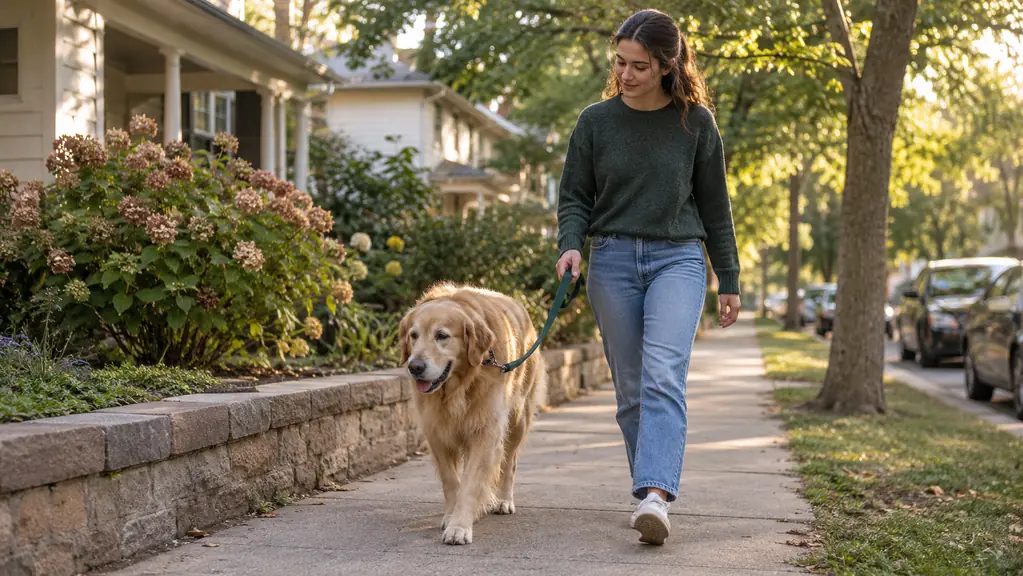
I am not trying to turn a ten-year-old Labrador mix into an athlete. I am trying to keep the two neighborhood walks we both love. Around the block, morning and late afternoon, twenty minutes, nose down, in no hurry. When her hips were at their worst in the winter I cut them to the end of the street and back, and I felt like I had lost something. I have them back now. If joint support buys me another year of those walks, it has earned its shelf space.
The quilt on the couch is the whole point
Honey has her own spot on the couch with a folded quilt on it. She follows me from room to room. She gets a small spoon of plain cooked chicken when I cook. None of that is about joints. All of it is what the joints are for. She still waits for my hand under her hips on a cold morning to get into the car. She still takes the porch steps one at a time when the temperature drops. She is better, not cured, and better is what we were working toward. I will take better.
What I'd Skip
If I were starting over, here is what I would not do. I would not buy four different things in one week and then try to guess which one helped, because I came close to that and it would have cost me months of clear observation. I would not treat a supplement as a substitute for the vet visit, because early arthritis in both hips is a diagnosis and not a hunch. I would not stack a second glucosamine product on top of the first, which our vet specifically warned against when I asked her. And I would not expect a cure. Honey is a ten-year-old dog with arthritis. What I want is a comfortable, ordinary, boring day, most days, and that is roughly what I have.
By late July she came down the porch in one motion for the first time since January. On cold mornings she still takes them one at a time, and I am not going to pretend otherwise.
Ten reasons later, one bottle on the shelf
Cosequin from Nutramax Laboratories has been Honey's breakfast since June, per the label for her weight and with our vet's agreement. If your dog is slowing down, this is what our vet reached for, and it is where I would start the conversation with yours.
Amazon Check Today's Price on Amazon →